



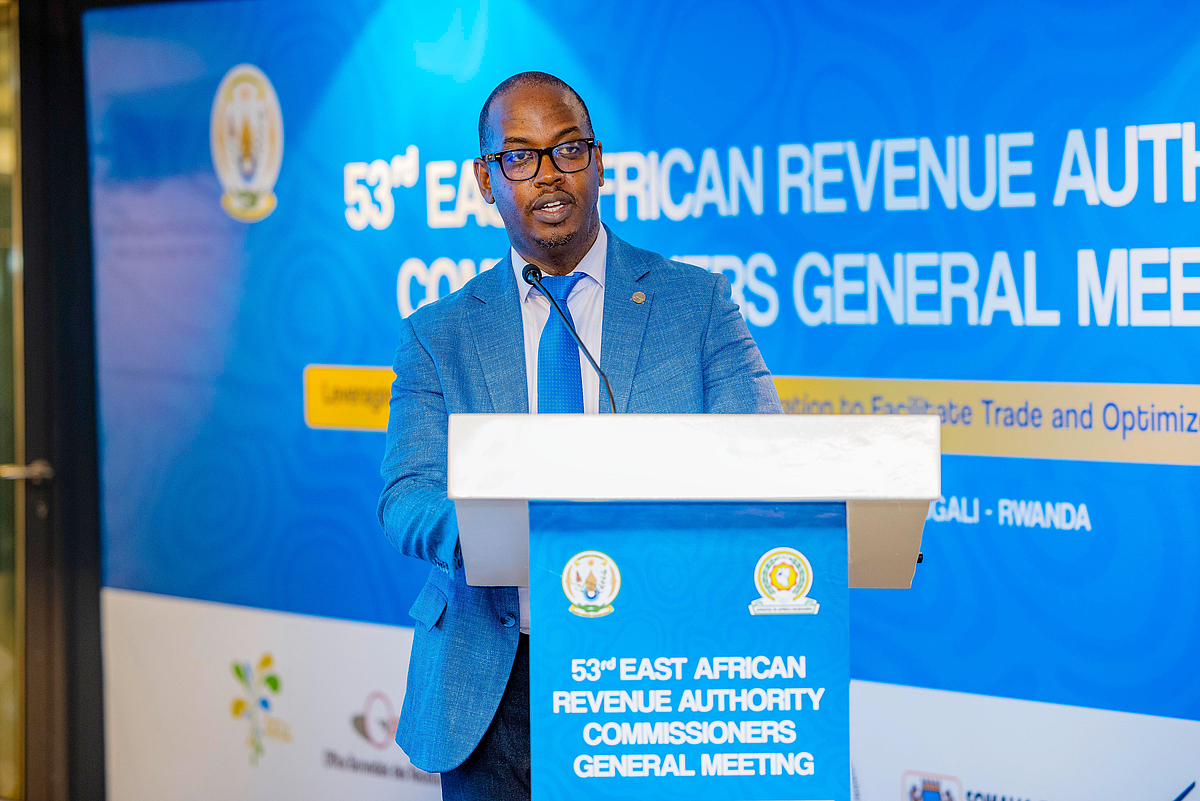
Kigali, Rwanda – Revenue administrations across the East African region have reported strong performance in 2024/25, with GDP growth averaging 5.8% and most agencies surpassing their collection targets. Annual revenue growth hit an average of 16%, significantly outpacing overall economic expansion.
Despite these gains, experts warn that informality, compliance gaps, and external pressures continue to limit the efficiency of tax systems. Challenges such as smuggling, under-declaration, and slow adoption of e-invoicing remain widespread, while geopolitical tensions and inflation spikes disrupt revenue mobilization.
“This gap highlights the need for ongoing improvements in both policy and administration to optimize domestic resource mobilization,” said Kabera, stressing the importance of regional cooperation. “Shared experiences, harmonized practices, and coordinated enforcement can help countries respond more effectively to uncertainty.”
Kabera also cautioned against uncoordinated tax incentives that prioritize short-term gains over regional stability. “Harmful competition undermines the collective revenue base. Greater alignment of tax policies would simplify compliance for cross-border businesses and strengthen the integrity of the regional market,” he noted.
The two-day meeting, hosted by the Rwanda Revenue Authority (RRA), brings together Commissioners General and senior experts from departments including Research and Planning, Customs, Domestic Taxes, ICT, Legal Affairs, and Integrity. The agenda focuses on digital transformation, smarter enforcement, simplifying taxpayer experiences, and harmonizing regional approaches to tax administration.
In his opening remarks, RRA Commissioner General Ronald Niwenshuti highlighted the progress achieved since the first meeting in 1999. “Member countries have strengthened domestic resource mobilization, reduced reliance on external financing, and built fiscal sustainability through robust revenue systems. This progress is the result of collective efforts, though challenges persist,” he said.
The meeting also addresses Africa’s ongoing struggle with illicit financial flows, which cost the continent an estimated USD 88 billion annually, up from USD 50 billion in 2015, according to the AU High-Level Panel. Participants emphasized the need for stronger cross-border enforcement, improved tax policy alignment, enhanced digitalization, and continued knowledge sharing to safeguard regional resources.

